
Date: April 19, 2026
Location: Western Myanmar Front (Rakhine, Chin, Sagaing, Zoland)
Perspective: Senior Regional Analyst
Status: Strategic Consolidation vs. Institutional Rivalry
Editorial: The River and the Playbook
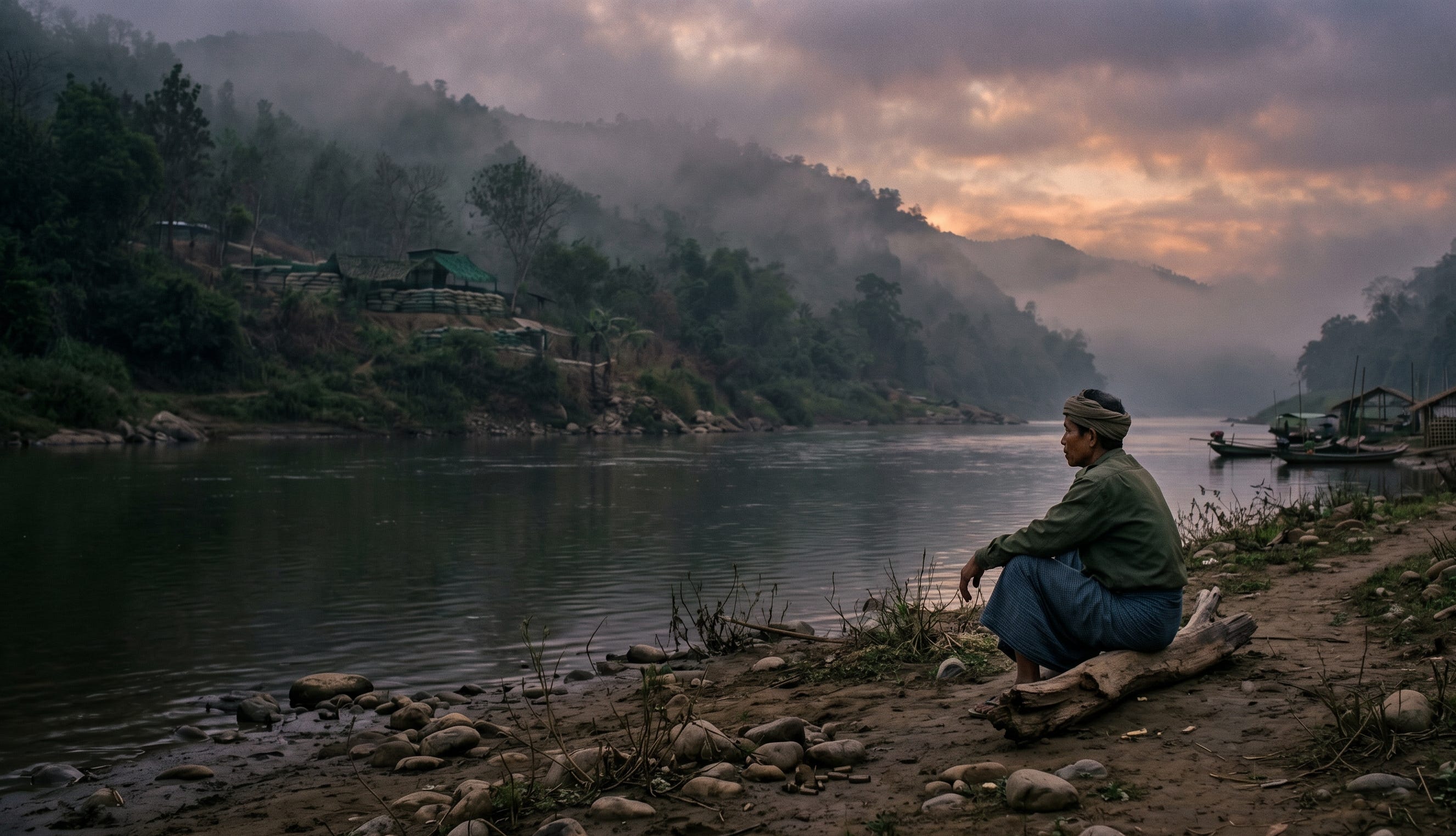
Standing by the river today—in a zone where the currents haven’t changed even as the frontlines have moved a dozen times—one is reminded of the cyclical nature of power in Myanmar. The military is running a familiar playbook: a “new” civilian-look presidency for Min Aung Hlaing, followed by the tactical release of former President Win Myint on April 17.
To the seasoned observer, this is the Than Shwe-era script. But the water in the river today flows through a different geography. The “Zomia” of 2026 is no longer waiting for a gesture from Naypyidaw; it is building its own reality.
Dispatch No. 5: The Arakan State-Building Project
Focus: Rakhite Regional Primacy and the Western Corridor
As of mid-April 2026, the Arakan Army (AA) has effectively achieved consolidated sovereignty over the coast. By controlling 14 of 17 townships, the AA is no longer an “army” in the traditional sense; it is a regional administrator managing a proto-state.
The Paletwa Strategic Link: Control over Paletwa (Chin State) has transformed the AA into the primary arbiter of the Kaladan Multi-Modal Project. This corridor is the lung of the Western front, connecting the Arakan coast to Mizoram and the Indian market.
The Quartermaster Doctrine: The AA is currently serving as the logistical and training “mentor” for the Chin Brotherhood Alliance (CBA). Through a one-year “Frontline Apprenticeship,” 500 Chin recruits are being integrated into active operations, returning to their mother organizations fully equipped.
Bamar Heartland Projection: The AA’s leadership of Bamar PDFs into Magwe and the Irrawaddy Delta marks a significant shift. This is a strategic export of the “Way of Rakhita” into the Bamar heartland, destabilizing the junta’s core defensive perimeters.
Dispatch No. 6: The Highland Quota War
Focus: The Competition for the “Chin Mandate”
A “managed competition” between the Kachin Independence Army (KIA) and the Arakan Army (AA) is currently the primary driver of Chin politics. Both “Big Brothers” are backing rival visions of the highland future.
The 500-Recruit Benchmark: A quantitative arms race has emerged. The Chinland Council (CC), backed by the KIA’s institutional model, is racing to hit a 500-youth quota to build a centralized State Army. Simultaneously, the Chin Brotherhood (CBA), backed by the AA’s kinetic model, is recruiting their own 500-youth vanguard.
Legitimacy vs. Capability: While the KIA focus is on “Officer Training” and administrative depth for a future federal unit, the AA focus is on immediate, elite-equipped mobile forces. This is forcing local CDFs to choose between long-term institutionalism and immediate military parity.
Dispatch No. 7: The Zomi Path
Focus: Sovereignty Beyond the “Chin” Framework
In the North (Tiddim, Tonzang, and the Kabaw Valley), the Zomi Movement remains the ultimate outlier. This is not a “spillover” or a “fusion”; it is a distinct, indigenous identity formation.
The Fortress North: Led by the ZRA-Eastern Command and the Zomi National Party (ZNP), the movement has opted for a strategy of Neutrality through Strength. They have explicitly signaled a desire to stay “out of the duel” between the CC and CBA.
Identity Sovereignty: The Zomi leadership rejects the centralization attempts of the Chinland Council, prioritizing their own linguistic, land, and political rights. In 2026, the Zomi-majority areas represent a unique “Third Space” that resists being co-opted by either the Bamar revolution or the larger ethnic alliances.
Policy Note: The Diplomatic “Pressure Valve”
The release of former President Win Myint must be viewed through a lens of result-oriented diplomacy. While we welcome the release of a legitimate civilian leader, we must not be fooled by the timing.
The Trap: The military is using this to sanitize the “inauguration” of Min Aung Hlaing.
The Counter-Move: The international community must insist that “release” includes agency. If Win Myint is not allowed to communicate freely with the NUG, EROs, and the Zomi/Chin stakeholders, the amnesty is merely a change of prison walls.
If you find this analysis valuable, consider supporting my work so I can keep these deep dives coming: https://buymeacoffee.com/zolandfrontier